
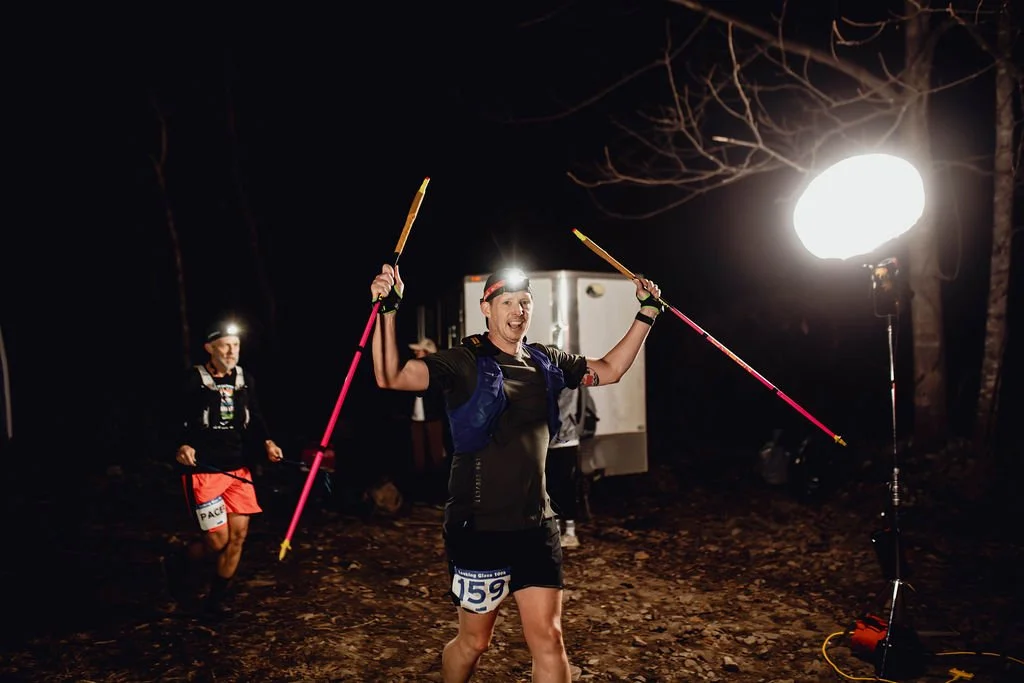
YOU DON’T NEED TO START OVER
You already built the endurance. Now let’s teach it the terrain
Transitioning from road running, triathlon or cycling to trail and ultra-distance racing requires more than swapping pavement for dirt. It's about learning how to use the fitness you've already built in a completely different environment.
YOU’VE ALREADY DONE THE HARD PART
Maybe you've run marathons. Maybe you've finished an Ironman. Maybe you've spent years building fitness on the bike.
You know how to train. You know what it feels like to work hard. You understand endurance.
Then you step onto a technical trail and suddenly your marathon pace doesn't matter quite so much.
The climbs are different. The descents are different. Your legs feel different. Even pacing becomes a different game.
That's not because you aren't fit. It's because you're learning a new sport.
The goal isn’t to start over. It’s to transfer what you’ve built.
THE ROAD TO TRAIL TRANSITION
PACE - EFFORT
Pace is a useful target on the road. On trail, terrain makes pace almost meaningless.
Pace by effort, terrain, elevation, and duration rather than chasing a number.
CLIMBING - SKILL
A steep climb isn’t just a harder version of a road run.
Knowing when to run, when to hike, and how to manage effort efficiently, without detonating your legs halfway up a climb (HR correlation to pace).
DESCENDING - CONFIDENCE
Descending is a skill. It’s one I’m still learning but definitely better than I was.
Foot placement, body position, vision, and confidence all matter.
HIKING - STRATEGY
Walking (hiking) isn’t failure on trails.
Power hiking can be one of the most effective tools, especially when the climbs are long and/or steep.
Hiking conserves energy.
CYCLING - ADVANTAGE
Used strategically, cycling builds aerobic fitness, climbing strength, and endurance while reducing impact.
Your bike is part of the plan, not competing with running.